Whose Story Is It Anyway? The Fight to Bring Bodington's Heritage Back Where It Belongs
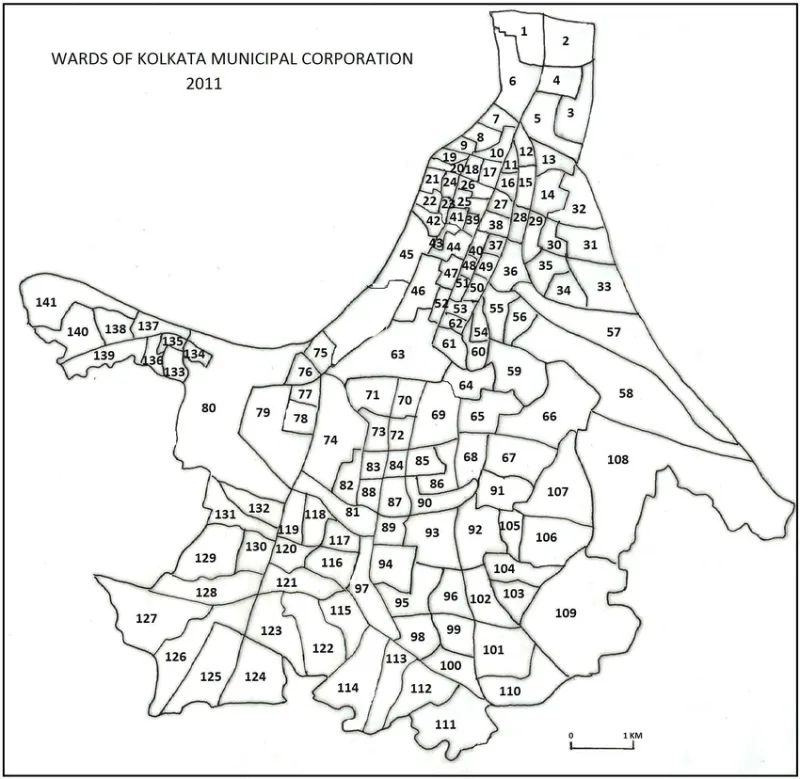
Photo: Directorate of Census Operations, West Bengal, CC BY 3.0, via Wikimedia Commons
There is a particular kind of estrangement that comes from seeing your own history behind glass in an institution you must travel hours to visit. The handwritten ledger from a local mill. The baptismal records of families whose descendants still live on the same street. The photograph of a town square taken on a day that the oldest residents can still describe from memory. These are not abstract historical artefacts. They are, in the most tangible sense, the possessions of a community — and yet, for much of the past century, they have been systematically absorbed into regional repositories, national collections, and university libraries that, whatever their considerable merits as custodians, were never designed to return what they receive.
That dynamic is beginning to shift. Across Britain, small communities are reasserting their claim to the records that define them, and Bodington finds itself at the forefront of a quiet but consequential movement.
The Logic of Centralisation — and Its Cost
The case for centralised archiving has always rested on sound institutional reasoning. National and regional repositories offer climate-controlled environments, professional cataloguing, and a degree of permanence that a village hall or local library cannot easily guarantee. When a parish council donated its minutes to a county record office in the 1970s, the decision was rarely contested. Preservation, it was understood, meant removal.
But preservation and accessibility are not the same thing, and critics of this model have long argued that the communities most affected by centralisation are precisely those least equipped to benefit from it. If the records of Bodington's industrial past sit in a metropolitan archive, they are available — in theory — to anyone with a reader's ticket and the means to get there. In practice, they are available to academics, to genealogists with resources, and to those whose professional lives already orbit institutions of that kind. They are not, in any meaningful sense, available to the community whose forebears created them.
"There's a kind of double dispossession that happens," explains one archivist who has worked extensively with community heritage groups in the north of England. "First, the economic conditions that shaped a place are removed — the industries close, the employers leave. Then, decades later, the records of those industries are removed as well. What's left is a community that has lost not just its livelihood but its evidence."
The Practical Work of Retrieval
Retrieving heritage from institutional collections is rarely straightforward. National archives operate under legal frameworks that govern the transfer and loan of holdings, and many collections were donated under conditions that restrict their movement. A photograph album gifted to a regional museum in 1962 may be legally immovable, regardless of how strongly the donating family's descendants might wish otherwise.
Nevertheless, a range of mechanisms has emerged that allow communities to reclaim meaningful access to their own records without necessarily requiring physical repatriation. High-resolution digitisation programmes, negotiated long-term loans for exhibition purposes, and formal community partnership agreements have all been deployed with varying degrees of success. In several cases, local heritage organisations have worked directly with national institutions to create satellite access points — effectively bringing a curated selection of digitised holdings back to the communities they concern.
In Bodington, this approach has gained considerable traction. Working alongside regional archivists and with modest funding secured through heritage grants, local volunteers have spent the better part of three years identifying holdings dispersed across multiple institutional collections and lobbying for their digitisation. The results, while incomplete, have already yielded discoveries of genuine significance: employment records from a former textile concern that shed new light on patterns of migration into the area during the early twentieth century, and a series of council correspondence files that document a planning dispute whose legacy is still visible in the town's built environment today.
"What we found wasn't just interesting," said one of the volunteers involved in the project. "It was ours. It felt like finding something that had been mislaid, not just stored somewhere inconvenient."
The Tension Between Stewardship and Ownership
Not everyone involved in this debate frames it as a straightforward contest between community rights and institutional control. Many professional archivists are themselves deeply sympathetic to the argument for local access, while also bearing responsibility for collections whose physical integrity cannot be compromised by repeated handling or inadequate storage conditions.
"We're not adversaries in this," one senior archivist at a regional repository was at pains to emphasise. "Our job is preservation, and we take that seriously. But preservation without engagement is just hoarding with better labelling. If communities can't connect with the material we hold on their behalf, then we've failed at the most important part of what we're supposed to do."
This view — that institutional custody and community ownership need not be mutually exclusive — is gradually reshaping how some of Britain's larger collections approach their relationships with smaller localities. The Archives and Records Association has, in recent years, placed increasing emphasis on community engagement as a core professional obligation, and several county record offices have appointed dedicated outreach officers whose remit includes precisely the kind of collaborative retrieval work that Bodington's volunteers have been undertaking independently.
The emotional dimension of this work should not be underestimated. For many participants, the act of reclaiming records is inseparable from a broader process of civic repair — a reassertion of identity in communities that have, in various ways, experienced the erosion of both economic confidence and cultural continuity.
What Comes After Retrieval
The question of what to do with heritage once it has been, in whatever sense, returned is one that Bodington's community is now actively confronting. Digitised records require infrastructure to host them, volunteers to maintain them, and programmes to make them comprehensible and engaging to audiences who may have no prior experience of archival research. These are not trivial demands.
There is also the matter of interpretation. When a community takes possession of its own history, it assumes responsibility for how that history is told — a responsibility that carries both creative freedom and genuine risk. The temptation to curate selectively, to emphasise the flattering and elide the uncomfortable, is one that any honest heritage practitioner must acknowledge.
"We want to tell the full story," one of Bodington's project organisers said plainly. "That means the difficult parts as well. Otherwise we're just producing nostalgia, and nostalgia isn't history."
That commitment to honest, community-held heritage may ultimately be the most significant aspect of what Bodington and places like it are building. Not merely a collection of recovered documents, but a civic practice — a habit of looking clearly at where a place has come from, in the belief that such clarity has something useful to offer the present.
The records are coming home. What happens next is, as it should be, entirely up to the people they belong to.