Empty Rooms, Full Histories: Reimagining Bodington's Vacant Buildings as Spaces for Community Heritage
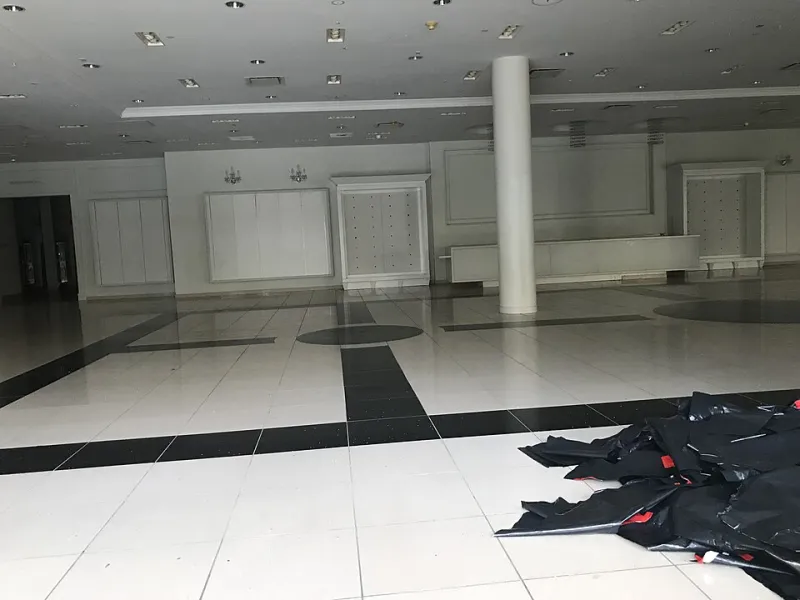
Photo: BornToZucc, CC BY-SA 4.0, via Wikimedia Commons
Walk along any secondary shopping street in Bodington on a weekday afternoon and the evidence of structural economic change is impossible to ignore. Boards cover windows where independent retailers once traded. A former public house — its etched-glass panels still intact — sits locked and awaiting a planning decision that may never come. A Victorian civic hall, its stonework recently cleaned by the council, stands empty between sporadic hire bookings that fail to sustain its upkeep. These are not merely aesthetic problems. They represent the gradual erosion of the physical infrastructure through which communities understand and inhabit their own histories.
Yet this same vacancy, viewed from a different angle, constitutes an opportunity. Across Britain, a quiet but significant movement has emerged in which precisely these kinds of neglected or underused spaces have been transformed — sometimes temporarily, sometimes permanently — into venues for community-led heritage activity. The question is whether Bodington has the appetite, and the organisational capacity, to follow suit.
The Scale of the Problem — and the Potential
The UK's town centre vacancy rate has remained stubbornly elevated since the acceleration of online retail in the early 2010s, a trend compounded by the economic disruptions of the past several years. Local authorities across England have acknowledged that conventional retail will not return to fill these gaps; the question of what should replace it has, in many places, been answered by community organisations rather than developers.
The Local Trust's research into community asset transfer — the process by which publicly owned buildings are transferred to community groups at nominal cost — suggests that heritage and cultural uses are among the most viable and durable outcomes for such transfers. Buildings that find a purpose rooted in local identity tend to attract sustained voluntary effort and, crucially, the small but consistent revenue streams that keep them operational.
Bodington is not without precedent in this regard. Several buildings in the wider region have undergone precisely this kind of transformation in recent years, demonstrating that the model is not confined to larger cities with established cultural infrastructure.
Case Studies Worth Examining
In Hebden Bridge, West Yorkshire, a former Wesleyan chapel that had stood empty for nearly two decades was acquired by a community benefit society and converted into a combined heritage centre, archive space, and events venue. The project was funded through a combination of Historic England grants, the National Lottery Heritage Fund, and a community share offer that raised over £180,000 from local investors. The building now attracts visitors from across the Calder Valley and serves as the primary repository for the town's textile industry records.
Further south, in Coalville, Leicestershire, a network of temporarily vacant retail units on the high street was made available by the local authority to a heritage consortium under a peppercorn lease arrangement. The resulting 'pop-up museum' — occupying three adjacent shopfronts — ran for eighteen months, drawing thousands of visitors and generating sufficient evidence of public appetite to secure permanent premises nearby. The project's success rested on its deliberate informality: entry was free, displays were changed monthly, and local residents were actively invited to contribute objects and testimony.
These are not isolated examples. The Museum Development Network, which supports smaller and independent museums across England, has documented dozens of similar initiatives in the past decade. What they share is an understanding that heritage spaces need not be grand to be effective; they need only be accessible, well-curated, and genuinely rooted in the community they serve.
Funding and Legal Frameworks
For community groups in Bodington considering a similar initiative, the legal and financial landscape, while complex, is navigable. The primary funding routes for heritage-focused building projects include the National Lottery Heritage Fund's 'Grants for Heritage' programme, which supports projects from £3,000 upward; Historic England's Historic Places grants, targeted at buildings at risk; and the UK Shared Prosperity Fund, administered through local authorities, which can support community facilities in areas of economic deprivation.
Community asset transfer, governed by the Localism Act 2011 and the associated Community Right to Bid provisions, provides a mechanism through which groups can formally register an interest in publicly owned assets and, in certain circumstances, secure a period of protected time to develop a bid for acquisition. The process requires organisational capacity — typically, a constituted community group or registered charity — and a credible business plan, but it is not beyond the reach of determined volunteers with appropriate professional support.
For privately owned vacant buildings, the picture is more complicated but not without options. Short-term lease arrangements, sometimes facilitated by local councils acting as intermediaries with reluctant landlords, have enabled pop-up heritage projects in numerous UK towns. The Meanwhile Foundation, a UK organisation specialising in temporary uses for vacant property, has developed standardised lease agreements and guidance specifically designed to reduce the legal friction involved in such arrangements.
What Bodington Might Become
Imagine, for a moment, the former ironmonger's premises on the corner of the old market square repurposed as a rotating exhibition space — its original wooden fittings preserved, its counters repurposed as display cases for objects donated by local families. Imagine the closed public house on the terraced street serving once again as a place of gathering, this time for oral history evenings, archive browsing, and the kind of informal community conversation that heritage organisations struggle to generate in conventional library settings.
These are not fanciful propositions. They are, in various forms, already happening in towns across Britain that faced similar circumstances to Bodington and chose to act rather than wait for external solutions. The distinctive advantage that community-led heritage spaces hold over commercially developed alternatives is precisely their specificity: they tell the story of a particular place, in a particular voice, to the people who actually live there.
A Call for Civic Imagination
Bodington Heritage does not underestimate the challenges involved. Securing premises, managing volunteers, navigating planning regulations, and sustaining funding over the medium term are all substantial undertakings. But the alternative — allowing the town's vacant buildings to continue their slow deterioration while the knowledge and objects they might have housed disperse or disappear — is considerably more costly in the long run.
We invite residents, local businesses, heritage enthusiasts, and civic organisations to engage with this question directly. Which buildings in Bodington do you believe carry the greatest heritage potential? What stories would you want to see told in a community-led space? And — crucially — what skills or resources might you be willing to contribute to making such a project a reality?
The empty rooms are waiting. The histories are already there. What remains is the collective decision to bring the two together.