What Our Streets Are Telling Us: Decoding the Hidden History Beneath Bodington's Road Signs
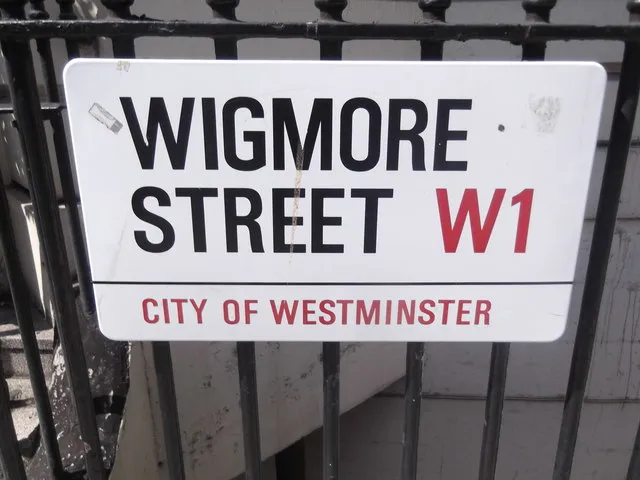
Photo: Robin Sones , CC BY-SA 2.0, via Wikimedia Commons
Street names are among the most democratic of historical documents. Unlike the portraits in civic halls or the plaques on grand buildings, they are encountered by everyone — the schoolchild on her morning walk, the delivery driver navigating by sat-nav, the elderly man who has lived on the same road for fifty years without once wondering why it bears the name it does. In Bodington, as in most British towns and cities, these names accumulate across centuries, each one a small sediment of local memory that the present generation inherits without instruction or explanation.
This investigation set out to trace the origins of a selection of Bodington's street names — and what emerged was far more than a dry exercise in etymology. It was, in effect, a parallel history of the area: one told not through official chronicles but through the unconscious choices of planners, landowners, councillors, and communities across several hundred years.
The Mechanics of Naming: Who Decided, and When?
Before examining individual cases, it is worth understanding how British street names came to be assigned in the first place. Prior to the nineteenth century, many streets in towns like Bodington acquired their names organically — from a prominent resident, a trade that dominated the thoroughfare, a physical feature of the landscape, or a local landmark. The arrival of Victorian municipal governance changed this considerably. New streets required formal naming for postal and administrative purposes, and local councils assumed responsibility for the process, sometimes honouring prominent citizens, sometimes perpetuating older colloquial names, and occasionally — as researchers in many towns have discovered — simply borrowing from wherever inspiration struck.
The result is a patchwork. Bodington's street map contains names drawn from at least four distinct historical layers, and unpicking them requires a combination of archival research, local knowledge, and — crucially — conversation with long-term residents whose family memories extend the documentary record.
The Forgotten Benefactor: Alderman Crabtree and His Enduring Legacy
Crabtree Lane, which runs between the old mill district and the newer residential development to the north, is one of the more puzzling names in Bodington at first glance. The lane is unremarkable in appearance — a modest residential street with none of the grandeur one might associate with civic commemoration. Yet the name, it transpires, honours one of the most consequential figures in the area's nineteenth-century history.
Thomas Alderman Crabtree — the title was honorific, not hereditary — served on Bodington's predecessor council during the 1870s and 1880s and was instrumental in securing funding for the area's first public wash-house, a facility that had a measurable impact on public health at a time when waterborne disease remained a serious threat. Local historian Geoffrey Marsh, who has spent three years compiling a biographical dictionary of Bodington's civic figures, describes Crabtree as "almost entirely unknown today, despite having done more for working-class life in this area than most of the people who get commemorated in stone."
The lane bearing his name is, therefore, a small act of institutional memory — though one that communicates nothing of its own significance to those who walk it daily.
Industry Encoded in Asphalt: The Trades That Shaped the Map
Several of Bodington's street names preserve the memory of industries that have entirely vanished from the local economy. Tenter Fields Road, for instance, refers to the tenter frames — large wooden structures fitted with hooks — on which freshly woven cloth was stretched to dry without shrinking. The textile trade that once defined this part of Yorkshire is now largely absent, yet its vocabulary persists in the street plan.
Similarly, Fleece Yard, a narrow passage off the main commercial street, almost certainly marks the site of a wool merchant's premises, while Shoddy Row — a name that residents have occasionally lobbied to change on grounds of its apparent pejorative connotation — in fact derives from the nineteenth-century practice of reprocessing wool waste into lower-grade fabric, a trade in which Bodington had several significant operators.
"These names are industrial archaeology," says Marsh. "If you know how to read them, you can reconstruct the economic geography of a town that has otherwise been completely built over."
Contested Names and Community Memory
Not all of Bodington's street names sit comfortably in the present. The national conversation about the commemoration of historical figures — accelerated considerably in recent years — has prompted some residents to scrutinise the origins of several local road names more carefully than had previously been the case.
Without rehearsing specific controversies here, it is worth noting that the process of investigating street name origins inevitably surfaces complexity. Figures honoured in one era may be viewed differently by subsequent generations; names chosen for administrative convenience may inadvertently erase earlier, community-derived names with deeper local roots. This is not an argument for wholesale renaming, but it is a strong argument for greater transparency — for ensuring that residents understand what and whom they are commemorating each time they write their address.
The Case for Heritage Plaques: Making the Invisible Visible
In several British towns and cities, local authorities and heritage organisations have collaborated to address precisely this gap in public knowledge. Small heritage plaques — distinct from the blue plaques associated with English Heritage, and typically produced and funded at the community level — have been installed at the entrance to streets with particularly significant histories, providing a sentence or two of contextual explanation.
Bodington Heritage is formally encouraging readers and community members to consider making the case for such plaques in their own streets. The process is more accessible than many assume: a well-researched proposal, supported by documented evidence and a degree of community backing, can be submitted to the local authority's street naming and numbering team, with heritage organisations often able to provide supporting letters and research assistance.
The most immediate candidates, based on our investigation, would include Crabtree Lane, Tenter Fields Road, and at least two further streets whose origins — space does not permit full treatment here — connect directly to episodes of genuine significance in Bodington's social history.
An Invitation to Look Again
The next time you pass a street sign in Bodington, we would encourage you to pause for a moment's consideration. That name — weathered, unremarkable, perhaps slightly bent from a decades-old collision — is a document. It records a decision made by someone, at some point, to attach a particular piece of language to a particular place. Behind that decision lies a story: sometimes a straightforward one, sometimes a contested and revealing one, but always a story worth knowing.
Readers who have information about the origins of local street names — family memories, documentary evidence, or simply long-held local knowledge — are warmly invited to contact Bodington Heritage. The map of this town is, in a very real sense, still being written.