Who Owns the Past? How Bodington Gave Communities Permission to Write Their Own Histories
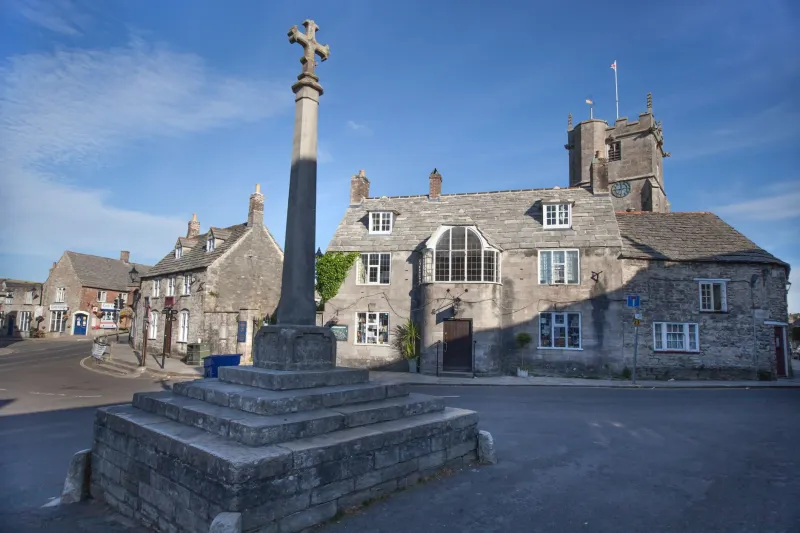
There is a long-standing convention in British intellectual life that history — real, authoritative history — belongs to those who have studied it formally. It belongs to the university lecturer with the published monograph, to the county archivist behind the mahogany desk, to the heritage professional who knows how to write a funding application in the correct register. Local communities, in this arrangement, are largely the subjects of history rather than its authors. They provide the raw material. Someone else does the interpreting.
Bodington has been quietly dismantling that arrangement for some years now. And in doing so, it has become something of an unlikely reference point for small towns and communities across Britain who are beginning to ask a straightforward but rather radical question: why are we waiting for someone else to tell us who we are?
The Problem With Leaving It to the Experts
To be clear, this is not an argument against professional historians. Rigorous scholarship matters. Source criticism matters. The ability to situate local events within broader national and social contexts is genuinely valuable, and communities benefit enormously when trained historians turn their attention to particular places and periods.
The difficulty arises not from expertise itself, but from the gatekeeping that so often accompanies it. When a community's history can only be accessed through institutional archives with restricted opening hours, or interpreted through academic papers written for specialist audiences, something important is lost. The story becomes detached from the people it is supposed to belong to. It grows abstract, curated, and — not infrequently — incomplete.
Professional historical accounts of places like Bodington have tended, over the decades, to privilege the documented over the lived. Parish records, council minutes, and newspaper cuttings yield certain kinds of knowledge very readily. They tell us who owned what, who held office, which buildings were erected and when. What they capture less reliably is the texture of ordinary existence: the informal economies, the neighbourhood rituals, the knowledge passed between generations in kitchens and workshops, the stories that were never considered significant enough to write down.
Those gaps are precisely where community-led heritage work has found its purpose.
What Bodington Demonstrated
The shift in Bodington did not begin with a manifesto or a formal initiative. It began, as most genuine cultural changes do, with a handful of people deciding to do something rather than wait for an institution to do it for them. Residents began collecting oral testimonies. Families opened their photograph albums. Former workers at long-closed industries shared technical knowledge that existed nowhere in any archive. Schoolteachers started incorporating local memory projects into their curricula, and discovered that pupils engaged with history differently when it concerned their own streets and surnames.
What emerged was not a rival to academic history, but a supplement to it — and in some respects, a corrective. Stories surfaced that no professional historian had thought to look for, because no professional historian had grown up here, walked these streets, or known the right people to ask. The community's own members, it turned out, held significant historical knowledge. They had simply never been invited to contribute it to any official record.
The cumulative effect has been a subtle but meaningful redistribution of historical authority. Bodington's heritage is no longer exclusively interpreted by those outside it. Residents have become researchers, curators, and narrators in their own right.
A Tension Worth Acknowledging
It would be dishonest to present this development as entirely uncontested. There are legitimate concerns on the academic side of the debate. Community memory is not infallible; it is shaped by nostalgia, by family loyalties, by the natural human tendency to smooth over conflict and difficulty. The past as communities prefer to remember it is not always the past as it actually occurred. Without some degree of critical distance, local heritage risks becoming local mythology.
These are fair points. But they apply, in different ways, to institutional history as well. Professional archives have their own silences and biases. The voices most faithfully preserved in official records have rarely been those of working-class communities, women, or people from minority backgrounds. Academic history has its own ideological currents, its own fashions and blind spots.
The more productive framing, perhaps, is not community knowledge versus academic knowledge, but rather the question of how the two might work together more honestly. Bodington's experience suggests that when professional historians engage with community heritage projects as genuine collaborators rather than benevolent overseers, the results are richer for both parties. Local knowledge sharpens academic inquiry. Academic rigour helps communities interrogate their own narratives rather than simply celebrating them.
Why This Matters Beyond Bodington
The reason Bodington's approach has attracted interest from towns elsewhere in Britain is not simply that it has produced good heritage content. It is that the model addresses a much wider problem: the growing sense, in many communities, that their experience of place is not reflected in any official account of it.
This is not a trivial matter. When people cannot find themselves in the histories told about their own localities, it erodes something important about civic identity and belonging. Conversely, when a community actively participates in the construction of its own historical record, the effect on local engagement and cohesion can be considerable. People invest in places they feel ownership over. They protect what they have helped to create.
Several towns in the North of England and the Welsh Marches have begun adapting elements of Bodington's approach, establishing their own community archive projects, oral history programmes, and participatory documentation initiatives. The details vary, but the underlying logic is consistent: local people are not merely the audience for local history. They are, in many respects, its most essential authors.
The Question of Authority
Perhaps the deepest shift that Bodington represents is a change in how authority over the past is understood. Authority, in the traditional model, derived from credentials and institutional affiliation. In the community heritage model, it derives from something rather different: proximity, continuity, and the kind of knowledge that can only be acquired by living somewhere across generations.
Neither form of authority is complete on its own. The professional historian brings critical method; the community member brings irreplaceable context. Britain's understanding of itself — in all its regional, social, and cultural complexity — is better served when both are taken seriously.
Bodington has not resolved this tension. But it has demonstrated, with some persuasiveness, that the tension is worth engaging with rather than avoiding. Small towns across the country are watching, and a growing number are drawing their own conclusions.
The past, it turns out, does not belong solely to those who study it. It also belongs to those who carry it.