Scattered Roots, Shared Memory: How Bodington's Descendants Are Finding Their Way Back Through Records and Screens
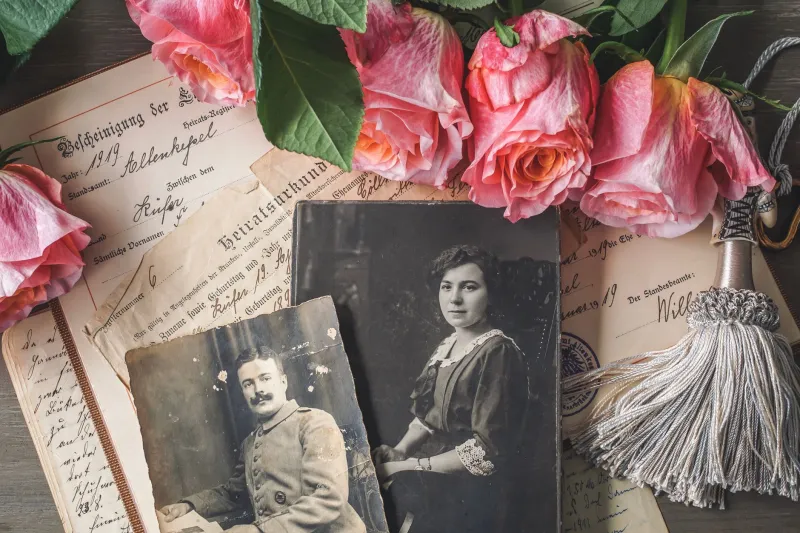
For much of the twentieth century, leaving Bodington was simply what people did. Economic necessity, wartime displacement, the pull of expanding industrial cities to the south and east — each generation sent its young outward, often with little expectation of return. What those departures left behind was not merely an absence of people, but a fragmentation of memory: stories half-told, surnames carried to unfamiliar postcodes, and family connections that quietly dissolved across the decades.
Today, something is changing. Driven by the twin forces of digital archival access and the peculiar intimacy of social media, a growing number of Bodington descendants are retracing those journeys in reverse — not always in body, but certainly in mind and spirit. The phenomenon, loosely described by researchers as 'heritage reconnection', is producing patterns of engagement that those working within Bodington's local history community are only beginning to understand.
What the Census Reveals
The decennial census has long served as a foundational document for genealogists, and for those tracing Bodington lineages, its value is considerable. The records from 1841 through to 1921 — now largely digitised and searchable through platforms such as Findmypast and Ancestry — chart with remarkable precision the outward movement of families whose surnames recur throughout Bodington's parish registers.
Analysis of these records reveals several distinct waves of migration. The mid-Victorian period saw significant movement towards the textile towns of the West Riding and the collieries of County Durham, as agricultural employment contracted and industrial wages beckoned. A second wave, concentrated in the interwar years, drew younger Bodington residents towards the expanding suburbs of Leeds, Sheffield, and eventually London. The post-war decades produced a more diffuse dispersal still, with individuals settling across the British Isles and, in notable numbers, emigrating to Canada, Australia, and New Zealand.
What the census cannot capture, of course, is the interior life of those departures — the reluctance, the nostalgia, the half-formed intention to return that so many families carried with them. That is where oral testimony and, increasingly, social media have begun to fill the gap.
The Rise of the Digital Genealogy Group
In recent years, several Facebook groups and online forums dedicated to Bodington family history have attracted memberships that would have seemed improbable a decade ago. Individuals whose grandparents left the area before the Second World War are posting photographs of unfamiliar relatives, sharing scanned documents retrieved from attic boxes, and asking questions about streets and buildings that no longer exist in the forms their ancestors would have recognised.
The conversations these groups generate are, in their own way, a form of living archive. A photograph shared by a member in Auckland may prompt a response from a retired schoolteacher in Harrogate who remembers the family in question. A query about a particular surname can unlock a chain of correspondence spanning three continents, eventually producing a body of knowledge that no single repository could have assembled alone.
Those who moderate these groups speak of a consistent emotional undercurrent to the exchanges. There is, as one long-standing contributor put it, 'a hunger for specificity' — a desire not merely to know that one's great-grandmother lived in Bodington, but to understand what her daily life looked like, which streets she walked, which institutions shaped her world. That hunger is proving to be a powerful motivator for engagement with formal heritage resources.
Returning Minds and What They Bring
The term 'returning minds' — used informally within Bodington's heritage circles to describe descendants who engage remotely but substantively with local history — captures something important about the nature of this reconnection. These are not, in most cases, individuals planning to relocate. They are people who have built lives elsewhere but who feel a genuine and sometimes urgent connection to a place they may never have visited.
What they bring to the heritage community is considerable. Many arrive with skills honed in professional contexts — archival research, data management, digital design — that complement the work of local volunteers. Others contribute financial support to preservation campaigns or donate digitised copies of family documents that have spent decades in drawers far from Bodington. Several have funded the transcription of specific records, enabling resources that would otherwise have remained inaccessible to become searchable by anyone with an internet connection.
There is also a subtler contribution: the perspective of distance. Descendants who encounter Bodington's history without the weight of local familiarity sometimes ask questions that those closer to the subject have ceased to consider. Why did a particular institution close when it did? What became of the community that had gathered around a specific building? These questions, arriving from Cardiff or Calgary, have on more than one occasion prompted local researchers to revisit assumptions they had long held as settled.
The Challenges of Dispersal
Not everything about this phenomenon is straightforwardly positive. The democratisation of genealogical research has produced, alongside genuine discovery, a great deal of error. Family trees assembled rapidly on commercial platforms can propagate mistakes at considerable speed, and the correction of inaccurate information — once it has been shared widely across social networks — is a slow and often thankless task.
There is also the question of ownership and interpretation. When descendants from outside the area engage with Bodington's history, they bring their own frameworks and priorities, which do not always align with those of the community that remained. Disputes over the significance of particular families, the framing of historical episodes, and the relative weight given to different aspects of the past can occasionally generate friction between 'inside' and 'outside' perspectives.
Those working in heritage preservation tend to view these tensions as productive rather than problematic, provided they are handled with care. The goal, as several practitioners have articulated it, is not a single authoritative narrative but a richer, more contested, and ultimately more honest account of what Bodington was and what it meant to those who passed through it.
Building Bridges Across the Distance
The most encouraging developments in this space are those that have created sustained, structured connections between the diaspora and the heritage community at home. Annual online gatherings, collaborative transcription projects, and jointly produced publications have all demonstrated that meaningful partnership does not require physical proximity.
For Bodington Heritage, the implications are significant. The community's story does not end at its administrative boundaries, nor does it conclude with the departure of those who left. It continues in the memories carried outward, in the records consulted in distant libraries, and in the conversations unfolding across social media platforms that would have been unimaginable to the people whose lives they are slowly recovering.
The scattered children of Bodington are finding their way back — not always in the manner their ancestors might have imagined, but with a fidelity to place that speaks well of what this community, at its best, has always represented.