Ordinary People, Extraordinary Records: How Bodington's Everyday Documenters Are Shaping the Archives of Tomorrow
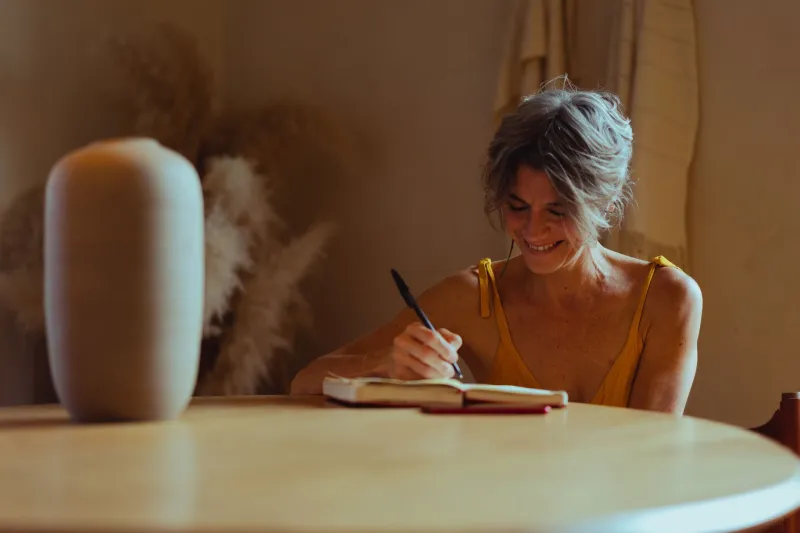
In a back room above a hardware shop on one of Bodington's older trading streets, a woman in her late seventies keeps a collection of exercise books filled with daily observations. She began writing them in the early 1990s — not with any grand intention, but simply because she found it useful to note down what had happened: who had called in, what the weather was doing, which businesses nearby had opened or closed, what people were talking about over the counter. She does not consider herself a historian. She would likely be surprised to learn that archivists at regional heritage institutions increasingly regard materials of precisely this kind as among the most valuable documentary evidence they could hope to acquire.
Her notebooks are not unique. Across Bodington, hundreds of ordinary residents are engaged in acts of informal documentation that, taken together, constitute something remarkable: a living, distributed record of a community in the present tense. The question that heritage practitioners and civic organisations are now beginning to ask is whether that record can be protected, and whether the people creating it can be encouraged to do so with greater intention.
The Gap That Formal Archives Cannot Fill
Public archives and civic record offices perform an essential function, but their collections are shaped by institutional priorities that have historically favoured the official, the prominent, and the already-significant. Council minutes, planning applications, electoral registers, and property deeds all find their way into the archive. The handwritten note tucked inside a recipe book, the shoebox of till receipts from a family-run greengrocer, the string of photographs taken on a mobile phone during a street fair — these do not.
Yet it is frequently the informal record that future researchers find most illuminating. The lived texture of a place — its rhythms, its minor dramas, its unremarkable afternoons — is rarely captured in official documentation. When social historians attempt to reconstruct what daily life actually felt like in a particular community during a particular decade, they turn to precisely the kinds of materials that Bodington's informal documenters are producing right now, and that are currently at risk of being discarded, lost, or simply forgotten.
The irony is acute. We are living through a period of extraordinary documentary abundance. Photographs are taken in volumes that would have been inconceivable a generation ago. People record their thoughts, observations, and experiences on social media platforms, in personal blogs, in group chats, and in private journals. The raw material for an exceptionally detailed archive of early twenty-first century community life is being generated constantly. The challenge is not production — it is preservation and curation.
What Gets Kept and What Gets Lost
The vulnerability of informal documentation takes several forms. Physical materials — diaries, letters, annotated calendars, handwritten lists — are frequently discarded when a household is cleared following a bereavement or a house move. The person who created them may have attached sentimental value to the objects; their relatives, faced with the practical pressures of clearing a property, often do not. Decades of careful observation disappear into a skip.
Digital materials present a different but equally pressing problem. Photographs stored on a phone or a laptop are contingent on the continued functioning of that device and the continued existence of the accounts or platforms through which they were shared. Social media posts, which represent a genuinely novel form of community record, are subject to platform closures, account deletions, and shifting privacy settings. The post in which a Bodington resident described the atmosphere in their street on a particular evening five years ago may already be inaccessible.
What this suggests is that the creation of informal documentation, however prolific, does not in itself guarantee its survival. Something more deliberate is required.
Encouraging the Unofficial Archivist
Heritage organisations working at community level have begun to explore practical approaches to this problem, and several models offer instruction for Bodington. In parts of Scotland and the north of England, local history societies have launched what might loosely be described as community collecting initiatives — structured programmes through which residents are invited to donate or deposit copies of informal materials with a local archive or heritage centre. The emphasis is on accessibility and low barriers to participation: donors are not required to sort or catalogue their contributions, and the initiative is framed not as an act of academic significance but as a simple gesture of community generosity.
The results have been instructive. Materials that would otherwise have been lost — including diaries, home videos, annotated maps, and collections of local business ephemera such as menus, receipts, and delivery notes — have entered permanent collections where they are available for future research. More significantly, the act of invitation has itself changed participants' relationship to their own documentation habits. People who had not previously considered their records to be of any interest beyond their immediate household have begun, in some cases, to document more deliberately and more consistently.
For Bodington, the implications are clear. A community initiative that explicitly invites residents to contribute informal records — and that frames everyday documentation as a civic act rather than an eccentric hobby — could yield an archive of considerable depth and diversity.
The Social Media Question
Any serious discussion of contemporary informal documentation must reckon with social media, and the heritage sector has been slow to do so. Platforms such as Facebook, in particular, have become significant repositories of community record. Local groups dedicated to Bodington's history, its businesses, and its day-to-day life contain thousands of posts, photographs, and comment threads that constitute a rich and largely unexamined documentary resource.
The problem of preserving this material is genuinely complex. Copyright, privacy, and platform terms of service all present obstacles. Nevertheless, heritage practitioners have begun to identify approaches — including the use of web archiving tools and the cultivation of relationships with platform providers — that may offer partial solutions. The Web Archive projects already undertaken by national institutions demonstrate that digital community record can be captured and preserved, given sufficient will and resource.
For community organisations in Bodington, the more immediate task may be to raise awareness among residents who are active on these platforms that their posts have documentary value, and to encourage them to maintain their own copies of materials they consider significant.
The Weight of the Mundane
Underpinning all of this is a question of values. We tend, culturally, to associate heritage with the exceptional: the famous building, the celebrated individual, the dramatic event. The mundane — the bus timetable, the till receipt, the overheard conversation noted in a diary — seems by definition unworthy of preservation.
This instinct is, archivally speaking, mistaken. The mundane is precisely what future generations will struggle to reconstruct. The extraordinary tends to leave official traces; the ordinary does not. A detailed record of what a Bodington resident bought at the market on a Thursday morning in 2024, what they paid for it, and what they thought about it on their walk home, tells future historians something that no council minute or census return ever could.
The woman with her exercise books above the hardware shop understands this, perhaps, better than she knows. She writes because it seems useful, because it helps her make sense of the days as they pass. That is reason enough. But if Bodington's heritage community can find ways to ensure that her notebooks, and the thousands of similar records being quietly created across the town, are preserved and accessible, then the community will have done something of genuine and lasting significance — not for posterity in the abstract, but for the specific future people who will one day want to know what this place was really like.