Ink-Stained Pages, Irreplaceable Knowledge: The Case for Taking Britain's Recipe Heritage Seriously
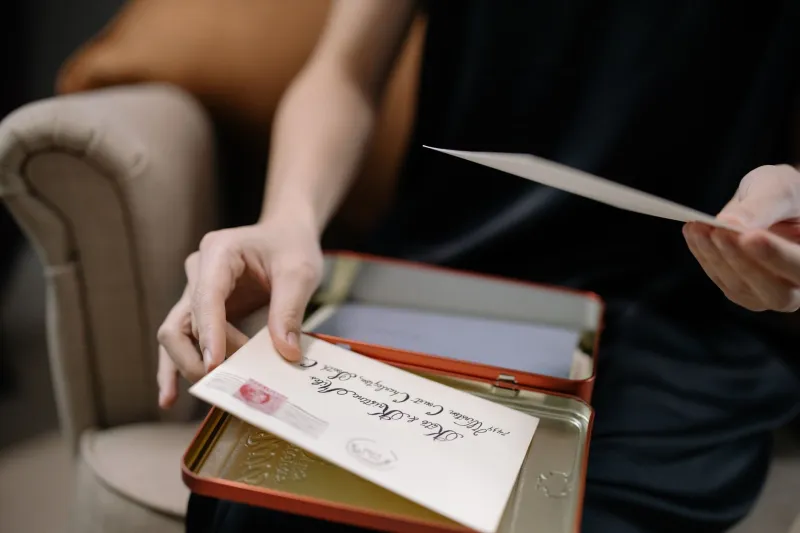
Somewhere in Britain, at this moment, someone is clearing out a deceased relative's kitchen and making a decision. The good china will be kept or distributed. The appliances will be sold or donated. And the battered tin box — the one containing forty years of handwritten recipe cards, newspaper cuttings folded into thirds, and a notebook with a cracked spine and a name written on the inside cover in faded biro — will most likely be discarded. It will go into a recycling bag or a skip, and with it will go a document of domestic life that no library holds, no archive has catalogued, and no museum has ever thought to acquire.
This is happening every day, across the country, and it represents a cultural loss that the heritage sector has been remarkably slow to acknowledge.
What a Recipe Actually Records
The instinct to treat cookery as peripheral to the historical record is understandable, if mistaken. History has traditionally concerned itself with the public and the formal: politics, economics, warfare, institutional life. The kitchen — associated with women, with labour that was unwaged and therefore uncounted, with the quotidian rhythms of feeding rather than the dramatic events of governing — has rarely been considered a site of historical significance.
But a recipe is not merely an instruction for producing food. It is a document of economy, recording what ingredients were available and affordable at a given time and place. It is a document of culture, reflecting the influences — regional, ethnic, religious, seasonal — that shaped a household's relationship to what it ate. It is a document of skill transmission, carrying within it the assumption that certain techniques were known and certain others needed explaining. And it is, frequently, a document of social relationship: recipes passed between neighbours, adapted from a mother-in-law's version, annotated with the name of the occasion at which a dish was first served.
Read in this way, a collection of handwritten recipes from a single household across several decades contains more information about the texture of ordinary life than many formally preserved documents. It records inflation and scarcity. It traces migration and cultural exchange. It marks celebrations and absences. It carries, in the margins and the crossings-out, evidence of decision-making and improvisation that no official source would think to note.
The Institutional Blind Spot
British museums and archives have not been entirely indifferent to food history. There are collections of printed cookbooks, exhibitions devoted to the history of British cuisine, and academic programmes that address food culture as a legitimate scholarly subject. What has been largely absent is any systematic effort to collect and preserve the informal, handwritten, household-level material that represents the actual practice of cooking as distinct from its codified instruction.
The reasons for this gap are partly logistical. Handwritten recipe collections are dispersed across millions of private homes. They are not produced by institutions and do not naturally flow into archival systems. They require active collection, which demands resources, networks, and a willingness to seek material in places that heritage bodies do not habitually look.
But the gap also reflects a residual hierarchy of value. Printed and published material — the cookbooks of celebrated chefs, the domestic science manuals of the early twentieth century, the wartime Ministry of Food pamphlets — has been treated as the legitimate record of British food culture. The handwritten card that tells you how Mrs Whitfield next door made her parkin, or the notebook in which a grandmother recorded the quantities needed to feed twelve for a wedding breakfast, has been regarded as touching but not serious.
This distinction is increasingly difficult to sustain. The informal record is not a lesser version of the formal one. In many respects, it is more revealing — precisely because it was not produced for public consumption and therefore carries no incentive to present an edited or aspirational version of domestic practice.
Grassroots Efforts and What They Demonstrate
Community heritage projects in various parts of Britain have begun to demonstrate what systematic collection of food knowledge can produce. In areas with strong regional food traditions — the north of England, Wales, parts of Scotland — local groups have gathered recipe collections, recorded cooking demonstrations with elderly practitioners, and created archives that document not merely what was cooked but how knowledge was transmitted and why particular dishes carried social significance.
The results are consistently illuminating. Collected recipe archives reveal patterns of ingredient substitution that document wartime and post-war austerity with greater immediacy than any government statistics. They record the persistence of regional traditions in communities that official culture long assumed had been absorbed into a homogenised national food landscape. They carry evidence of the culinary exchanges that accompanied immigration and settlement, tracing in flour and spice the movements of people that demographic records describe only in names and numbers.
Perhaps most significantly, these projects have demonstrated that the act of collection itself has community value. When elderly residents are invited to share their recipe knowledge — formally, with the understanding that it will be preserved and attributed — the response is frequently one of surprise and gratitude. The implicit message, that this knowledge matters and that its holders are regarded as authorities on something of genuine significance, has proven to be a meaningful form of recognition for people who have rarely been approached in that capacity.
The Argument for Formal Recognition
What is required now is a shift in how the heritage sector categorises and prioritises this material. Recipe collections, annotated cookbooks, and recorded food knowledge deserve the same formal consideration that is extended to other forms of community archive. This means developing collection frameworks, establishing deposit mechanisms, and — critically — funding the work of gathering material before the generation that holds it is gone.
It also means resisting the temptation to treat food heritage as a vehicle for nostalgia or culinary tourism. The value of these collections is not primarily that they enable contemporary cooks to recreate historical dishes, though that is a legitimate pleasure. Their value is that they constitute an archive of ordinary life that is both irreplaceable and, at present, largely unprotected.
The tin box in the kitchen drawer will not wait indefinitely. The decision about what to do with it is being made, in homes across Britain, every day. Heritage institutions that have not yet developed a clear answer to that decision are, in the most practical sense, allowing the archive to disappear.