Handwritten, Stained, and Irreplaceable: Why Bodington's Home Cooks Are Fighting to Save the Food Knowledge Corporate Britain Forgot
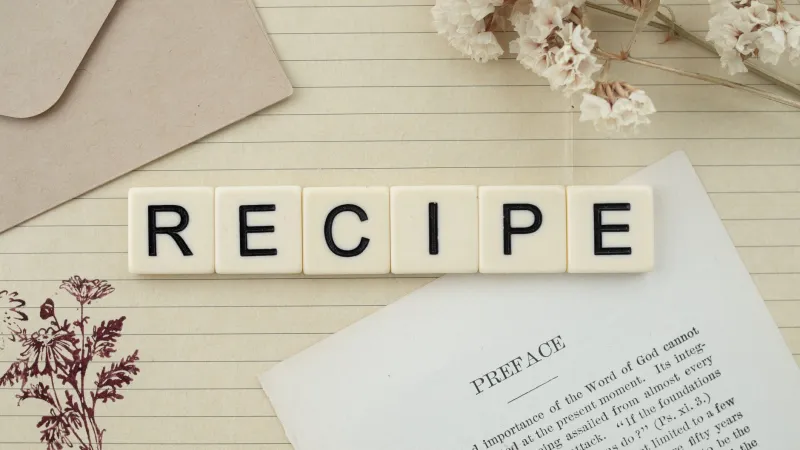
There is a particular kind of document that rarely makes it into a county archive or a museum display case. It is grease-spotted, written in at least three different hands, and annotated in the margins with instructions such as "use the blue pot" or "Mum always added more salt than this." It is, in short, a family recipe book — and in Bodington, a determined group of residents has decided that these unassuming objects deserve to be treated as the primary historical sources they genuinely are.
What began as an informal exchange between neighbours — a shared photograph here, a transcribed card there — has grown into something considerably more purposeful. The Bodington Culinary Memory Project, as participants have come to call it, is gathering handwritten recipes, recording cooking demonstrations with elder residents, and building a community-held archive that no supermarket algorithm or meal-kit corporation can replicate or replace.
More Than Nostalgia: What a Recipe Actually Records
It would be tempting to frame this effort as sentimental — a fondness for simpler times expressed through the medium of suet pudding. That framing, however, fundamentally misunderstands what a recipe preserves.
Consider what a single dish can document. The ingredients list speaks to what was available locally and what had to be imported, reflecting both the agricultural character of the surrounding land and the trading relationships that shaped Bodington's economy across the decades. The method — whether it calls for a range, an open fire, or the economical use of residual oven heat — maps onto specific periods of domestic life and the material conditions of the households that produced it. The handwriting itself, shifting from a grandmother's careful copperplate to a grandchild's biro scrawl, tells a story of transmission, of what was deemed worth passing on and what was quietly allowed to lapse.
Several contributors to the project have noted that their family recipes carry clear evidence of migration. Spice combinations that sit slightly outside the expected palette of traditional northern English cooking; techniques that preserve food in ways more associated with continental European or South Asian households; substitutions made when certain ingredients were unavailable or unaffordable — all of these details speak to the movement of people into and through Bodington over the course of the twentieth century. These are not footnotes to local history. They are local history.
The Seasonal Dimension
One of the most striking aspects of the collected recipes is how insistently many of them are tied to particular times of year. Dishes that call for ingredients "when the allotments are running over" or "once the hedgerows are ready" embed within them an entire relationship with the seasonal rhythms of the landscape. This is knowledge that a standardised recipe platform, drawing on ingredients available year-round through global supply chains, cannot easily replicate — and, more importantly, cannot contextualise.
For Bodington residents with long memories of kitchen gardens and cooperative vegetable growing, these seasonal markers are immediately legible. For younger participants in the project, they have prompted conversations about what the local land once produced and what it might produce again — a thread that connects the culinary archive to broader questions about food sovereignty, allotment provision, and the relationship between community and countryside.
The project has, in this sense, become something of an unexpected bridge between heritage preservation and contemporary civic concerns. Several participants have begun working with local growing initiatives, using old recipes as a practical guide to which heritage varieties of vegetable or fruit were once common in the area and might be worth reintroducing.
Class, Economy, and the Art of Making Do
No honest account of working-class British food heritage can avoid the question of poverty — and the Bodington archive does not shy away from it. Many of the recipes collected make a virtue of scarcity. Dishes designed to stretch a small quantity of meat across a large family; baking that uses fat rendered from other cooking rather than purchased separately; preserves and pickles that extend the life of a glut so that nothing is wasted. These techniques represent not culinary limitation but genuine expertise, developed over generations under economic constraint.
There is a particular irony in the fact that many of these methods — slow cooking, fermentation, the use of the whole animal, the preservation of seasonal produce — are now marketed as premium lifestyle choices by food brands charging considerable sums for the aesthetic of austerity. The Bodington project offers a different perspective: that this knowledge was never lost, only overlooked, and that it belongs to the communities that developed it rather than to the corporations now profiting from its rediscovery.
Participants have been candid about this tension. "My nan's recipe for potted beef wasn't a lifestyle statement," one contributor noted during a community gathering held at a local hall last autumn. "It was what you did when you couldn't afford to waste anything. The fact that it tastes extraordinary is almost incidental."
Building the Archive: Practical and Ethical Questions
The mechanics of the project have raised genuine questions about ownership, access, and consent. Unlike a conventional archive, where documents are typically deposited and held by an institution, the Bodington Culinary Memory Project is attempting to maintain a model in which contributors retain a sense of connection to what they have shared. Digital copies are made available through a community-managed platform, but families retain their original documents, and the project is explicit that commercial use of the collected material is not permitted without explicit agreement from contributors.
This approach reflects a broader principle that heritage preservation in Bodington has increasingly come to embody: that community archives exist to serve the community, not to become assets extracted from it. The question of who benefits from local knowledge — and who has historically benefited — is one that participants return to regularly.
There are also practical challenges. Some recipes exist only in the memory of individuals who have never written them down, and the project has invested effort in video documentation as a means of capturing technique as well as ingredient lists. The way a pastry is handled, the sound that indicates a jam has reached the correct set, the visual cues that tell an experienced cook when a bread dough is ready — none of these translate easily into text, and the project's video recordings may ultimately prove its most valuable holdings.
Why This Matters Beyond Bodington
The culinary memory project is, in one sense, entirely local — rooted in the specific history, geography, and community of Bodington. In another sense, it speaks to a challenge that communities across Britain are confronting: the progressive narrowing of food culture under commercial pressure, and the loss of the granular, place-specific knowledge that once gave regional cooking its character.
The homogenisation of the British diet is not a new concern, but it has accelerated sharply in recent decades. As supermarket ranges standardise and food media gravitates towards the photogenic and the fashionable, the dishes that sustained specific communities in specific places are at risk of disappearing not through dramatic loss but through simple neglect — because no one thought to write them down, or because the person who held the knowledge died before anyone thought to ask.
Bodington's response to this challenge is neither grand nor well-funded. It is driven by volunteers, sustained by community goodwill, and housed in a combination of a local building and a modest digital platform. But it is serious, methodical, and grounded in a clear understanding of what is at stake. The recipe box, it turns out, is a kind of archive — and Bodington has decided it is worth preserving.