What's in a Name? How Bodington's Identity Could Become Its Greatest Heritage Asset
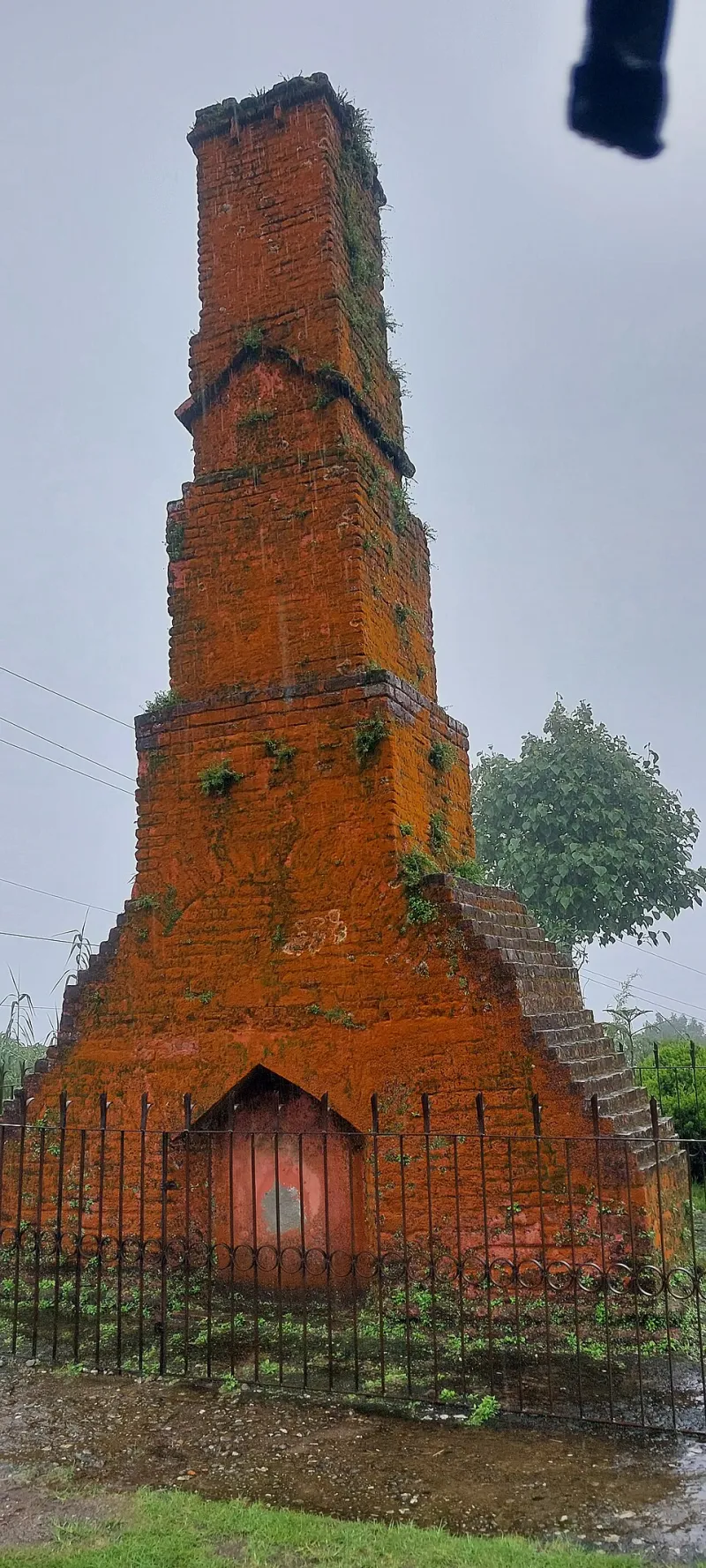
Photo: Pinakpani, CC BY 4.0, via Wikimedia Commons
There is a particular kind of power that resides in a place name. Not merely as a geographical marker or a postal convenience, but as a vessel for memory, distinction, and belonging. Bodington is not a common name. It does not appear on every map, nor does it sit comfortably beside the well-worn tourist trails of the Cotswolds or the Lake District. And yet, precisely because of that singularity, it holds something increasingly rare in an era of homogenised high streets and interchangeable market towns: the potential to mean something.
Across Britain, a quiet but significant shift is taking place in how local authorities, tourism boards, and community organisations think about heritage. Place branding — the deliberate cultivation of a location's identity to attract visitors, investment, and cultural recognition — has moved from the margins of civic strategy into its mainstream. The question for Bodington is not whether this movement will arrive at its door, but how the community chooses to receive it.
The Psychology Behind Place Attachment
Researchers in cultural geography have long noted that names with distinctive phonetic qualities or historical resonance tend to generate stronger emotional responses in visitors. A name like Bodington carries with it an implied depth — the suffix alone suggests Anglo-Saxon settlement, agricultural lineage, and centuries of continuous habitation. For the heritage tourist, that kind of etymological suggestion is not a trivial detail. It is an invitation.
Visitors drawn to heritage destinations are rarely motivated by a single attraction. They seek what tourism academics sometimes call a 'narrative landscape' — a place where the built environment, the local customs, the food, the language, and even the signage cohere into something that feels genuinely rooted. A distinctive name acts as the first chapter of that narrative. It signals to the prospective visitor that what follows will not be replicated elsewhere.
This is the foundation upon which successful heritage tourism is built, and it is one that Bodington, with thoughtful stewardship, is well-positioned to construct.
Learning From Elsewhere: The British Experience
The British Isles offer no shortage of instructive examples. Consider the transformation of towns such as Hay-on-Wye, which leveraged its identity as a book town into an internationally recognised cultural destination, or the way Whitby has woven its literary associations into an economic and cultural ecosystem that sustains local businesses and draws visitors year-round. Neither of these places possesses resources unavailable to a community like Bodington. What they possess, instead, is a coherent story told consistently and with conviction.
Local tourism professionals have observed that the communities which succeed in heritage tourism are rarely those with the grandest attractions. They are the ones that understand what makes them irreplaceable. Bodington's task, should it choose to pursue this path, is precisely that act of understanding — articulating clearly what it is, what it has been, and why that matters to someone arriving from outside.
It is worth noting, however, that these success stories did not emerge without tension. The commercialisation of place identity invariably raises difficult questions about who benefits, whose stories are foregrounded, and whether the act of packaging a community's heritage for external consumption fundamentally alters the thing being packaged.
The Authenticity Problem
This is the central anxiety that shadows any conversation about heritage tourism: the risk that in making a place legible and appealing to visitors, something essential about it is quietly lost. Critics of aggressive place branding argue that when a community begins to curate its identity for an outside audience, it inevitably simplifies, selects, and sometimes distorts. The complicated, the uncomfortable, and the mundane — all of which are equally part of a genuine heritage — tend to be smoothed away in favour of the picturesque and the marketable.
For Bodington, this concern deserves serious consideration. The stories that give a community its true texture are rarely the ones that translate easily into a visitor leaflet or a social media campaign. They are the stories of ordinary working lives, of conflict and compromise, of the buildings that were demolished and the traditions that quietly expired. A heritage tourism strategy that neglects these dimensions in favour of a more palatable narrative is not, in any meaningful sense, a heritage strategy at all.
Some community heritage advocates suggest a different framing entirely: rather than asking how Bodington can brand itself for tourism, ask how tourism can be made to serve Bodington's own heritage ambitions. The distinction is subtle but consequential. In the first formulation, heritage becomes a product. In the second, it remains a practice — and tourism becomes one of several means by which that practice is sustained and resourced.
Community Voices at the Centre
Any credible approach to place branding in Bodington must begin and end with the people who live there. This is not merely a point of principle, though it is certainly that. It is also a matter of practical effectiveness. Heritage tourism built on community-led storytelling tends to be more resilient, more distinctive, and more honest than that which is imposed from above by external consultants or generic destination management frameworks.
Local history groups, oral history projects, and community archives are not peripheral to this conversation — they are its foundation. The material they gather and preserve represents the raw substance from which any authentic heritage identity must be constructed. Investing in these organisations, giving them platforms and resources, and ensuring that their work informs whatever public-facing identity Bodington develops is not a cultural nicety. It is a strategic necessity.
There is also the question of who is invited into the room when these decisions are made. Heritage tourism, at its worst, can reproduce existing hierarchies — amplifying the voices of those already well-represented in the historical record while continuing to overlook others. A community as layered as Bodington deserves a more rigorous approach, one that actively seeks out the stories that have been marginalised and ensures they are part of whatever identity is projected outward.
A Name Worth Keeping Honest
The opportunity before Bodington is a genuine one. A distinctive name, a rich local history, and a community already engaged in the work of preservation and storytelling — these are considerable assets. The heritage tourism sector in Britain continues to grow, and the appetite for places that feel genuinely particular, rather than generically 'heritage', shows no sign of diminishing.
But the name Bodington will only function as a meaningful brand if what it represents remains tethered to something real. The moment it becomes a logo detached from living community, a marketing proposition rather than a shared identity, it loses the very quality that made it worth attending to in the first place.
The challenge, then, is not simply to attract visitors. It is to invite them into an honest encounter with a place that knows what it is — and has chosen to remain so, regardless of the pressures that come with being noticed.