Dust, Letters, and Lives: The Extraordinary Discovery That Rewrote What We Knew About Bodington's Past
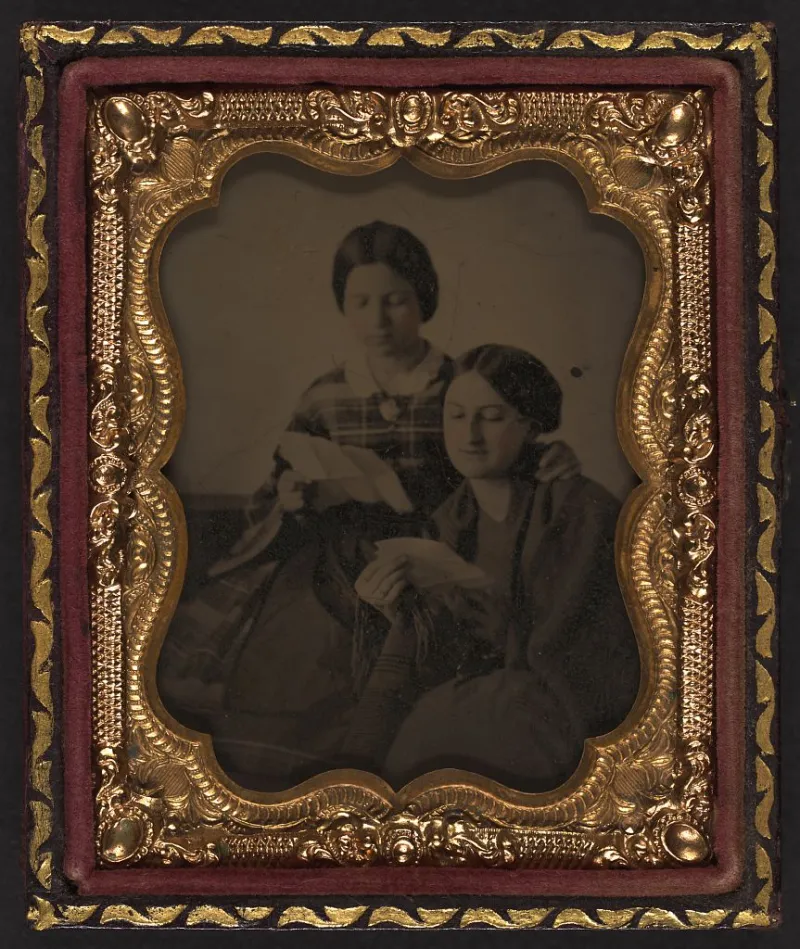
Photo: The Library of Congress, No restrictions, via Wikimedia Commons
There is a particular quality to the light in an old attic — thin, uncertain, filtering through a single grimy window as though it too is unsure whether it belongs. It was in precisely this kind of light that Margaret Ellerton first noticed the tin trunk tucked beneath the eaves of her late aunt's terraced house on the eastern edge of Bodington. She had been expecting very little. What she found changed everything.
Inside the trunk were bundles of letters tied with faded ribbon, a collection of photographs mounted on card, a household account book covering three decades, and several smaller envelopes containing receipts, church bulletins, and handwritten recipes. The materials belonged to the Ellerton family — or rather, to successive generations of them — and together they constituted something far more significant than a personal keepsake collection. They were, in effect, a documentary record of Bodington life stretching back to the late Victorian era.
A Detective's Work in a Cramped Space
For local historian and Bodington Heritage volunteer David Ashworth, the call from Margaret Ellerton was the kind that comes rarely in a career spent combing through parish registers and council minutes. "I drove over the same afternoon," he recalls. "You develop a sense, after a while, for when something is genuinely significant. This was immediately apparent."
The cataloguing process that followed was painstaking and slow. Each letter had to be handled with care — many were fragile, their ink faded to a pale brown, the paper brittle at the folds. Ashworth and a small team of volunteers worked methodically through the trunk's contents over several weekends, creating a basic inventory before any more detailed analysis could begin. Photographs were sleeved in archival plastic. The account book was digitised page by page.
What emerged from this careful detective work was a portrait of a family — and through them, a community — navigating the full sweep of twentieth-century British life. The letters from the 1910s and 1920s speak of rationing and anxiety, of men away at the front and women managing households on drastically reduced means. By the 1940s, a second generation is writing home from different theatres of war, while the domestic correspondence back in Bodington records the rhythms of a community pulling together under pressure. Later decades bring their own textures: the anxious optimism of post-war reconstruction, the gradual loosening of social formality, the small triumphs and quiet sorrows of ordinary lives.
What Intimate Records Reveal That Official Sources Cannot
The value of a collection such as this lies precisely in its intimacy. Official archives — council minutes, census returns, newspaper reports — record what institutions decided and what events occurred. They rarely capture how people felt, how they managed, or what they said to one another in unguarded moments. Personal correspondence does all of this, often in vivid and unexpected detail.
A letter from 1923, for instance, describes a neighbour's dispute over a shared yard in terms that illuminate both the social geography of Bodington's terraced streets and the intricate codes of respect and obligation that governed community life. A shopping list from 1951 — preserved apparently by accident inside the account book — tells us more about post-war austerity in a single column of figures than many a formal historical account. Photographs of street gatherings, chapel outings, and garden parties place named individuals within recognisable Bodington landscapes, providing a visual record that complements and enriches the written material.
For researchers interested in social history, women's history, and the history of working-class domestic life in particular, such collections are invaluable. Much of what was written and preserved by women in households like the Ellertons' has simply not survived — discarded, overlooked, or never considered worthy of formal archiving in the first place. The Ellerton collection is, in this sense, a small act of recovery.
The Ethics of the Opened Envelope
Yet the very intimacy that makes this material so historically rich also raises difficult questions. Some of the letters in the collection are candid in ways that their authors could never have anticipated becoming public. There are references to family tensions, financial difficulties, and personal relationships that were clearly never intended for any eyes beyond those of the original recipient. Several living individuals — descendants of those mentioned in the correspondence — had no idea that these documents existed until Margaret Ellerton made contact.
The question of who has the right to share, interpret, and publish such material is not one with easy answers. In the United Kingdom, copyright in unpublished letters generally rests with the author or their heirs, and personal information may also engage data protection considerations, even in historical contexts. Beyond the legal dimensions, there are ethical ones. The fact that something is historically interesting does not, by itself, confer the right to make it public.
Bodington Heritage has approached this carefully. Working in close consultation with the Ellerton family, and with advice from heritage professionals, the project team has adopted a set of principles: that living individuals must be informed and given the opportunity to respond before any material involving them or their close relatives is published; that particularly sensitive content will be withheld from public access for a defined period; and that the family retains meaningful input into how the collection is described and contextualised.
"It isn't our story to tell on our own terms," Ashworth is clear on this point. "We are stewards, not owners. The history belongs to Bodington, but the lives in those letters belonged to real people, and that has to be respected."
A Collection in Search of a Home
With cataloguing now substantially complete, attention is turning to the question of where the Ellerton collection should ultimately reside. The family is understandably reluctant to see it dispersed or transferred to a distant institution with no particular connection to Bodington. At the same time, proper conservation — particularly of the more fragile photographic material — requires resources and facilities that a small community heritage project cannot easily provide.
Conversations are ongoing with the local authority archive service, and there is cautious optimism that a formal deposit agreement can be reached — one that keeps the collection accessible to Bodington residents and researchers while ensuring its long-term physical preservation. A modest digitisation project is already under way, with the aim of making a curated selection of material available online through the Bodington Heritage website.
For Margaret Ellerton, the past several months have been unexpectedly moving. "I knew my family had been in Bodington for a long time," she says. "But I didn't know them like this — not as people living through things, worrying about things, writing to each other. It makes them very real."
That, perhaps, is the most important thing that collections like this one can do. They restore dimensionality to lives that history has flattened into names and dates. They remind us that the past was inhabited by people as complicated, as hopeful, and as uncertain as ourselves. And they ask us, in the most direct possible terms, to treat those people with the same care and consideration we would wish for our own stories — when, one day, someone else opens the trunk.