Surnames as Social History: What the Bodington Name Reveals About Three Centuries of Community Life
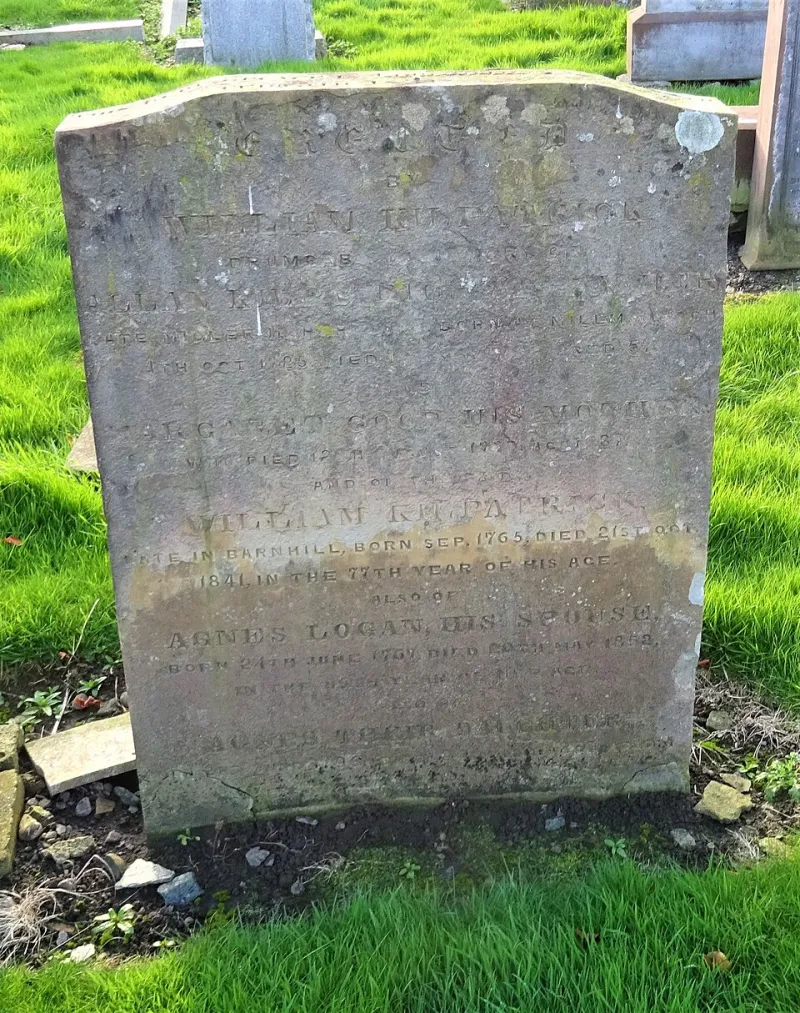
Photo: Rosser1954, CC BY-SA 4.0, via Wikimedia Commons
There is a particular kind of history that does not announce itself through grand civic monuments or municipal plaques. It accumulates quietly, in the cramped handwriting of a Victorian registrar, in the occupation column of a census return, in the faded ink of a trade directory entry listing a tallow chandler or a colliery clerk. Genealogy, when pursued with rigour and contextual awareness, becomes something altogether more ambitious than a personal pastime. It becomes a method of reading a community's own transformation back to itself.
The Bodington surname offers an unusually instructive case study. Relatively uncommon in national terms, yet persistently present across the local historical record, it functions almost as a barometer — sensitive to the pressures of economic change, demographic movement, and social aspiration that have reshaped this community across the centuries. To trace it is to trace something of the town itself.
Where the Name First Appears
The earliest reliable appearances of the Bodington name in local parish records date to the mid-seventeenth century, concentrated in agricultural settlements on the town's eastern periphery. At this stage, the occupational designations attached to the name are almost uniformly rural: husbandman, yeoman, labourer. The family, such as it can be reconstructed from fragmentary baptismal and burial entries, appears rooted to a specific geography — tied to the land in the manner characteristic of pre-industrial English rural communities.
What is immediately striking, however, is the relative stability of this early period. The same surnames recur across neighbouring parishes in a pattern consistent with what historians of early modern England describe as 'parish endogamy' — the tendency of communities to marry predominantly within a defined local radius. The Bodington name does not travel far in these early decades. It belongs, emphatically, to place.
The Industrial Disruption and What It Did to Family Patterns
The eighteenth century introduces a note of complexity. As proto-industrial activity — textile working, small-scale mining, ancillary trades — began to reorganise the economic geography of the region, the Bodington surname begins appearing in locations and occupational contexts that would have been unrecognisable to its seventeenth-century bearers. A Bodington is recorded as a framework knitter in one parish; another, some miles distant, as an apprentice to a blacksmith.
This dispersal is not merely incidental. It reflects a broader pattern of internal migration driven by the search for waged work — a pattern that was, by the early nineteenth century, pulling families across the country into the gravitational field of expanding industrial towns. Census records from 1841 and 1851 reveal Bodington households in urban streets where their grandparents' generation would almost certainly never have set foot. The occupational columns tell their own story: pit sinker, mill operative, railway navvy. The agricultural world that had defined the name for generations had, within the span of two or three lifetimes, receded almost entirely.
Reading Social Mobility Through the Record
Perhaps the most revealing dimension of this genealogical investigation concerns the evidence — tentative, but genuine — of social mobility across successive Bodington generations. By the latter half of the nineteenth century, a discernible divergence emerges within what had once been a relatively homogeneous family network. Some branches remain embedded in labouring occupations; others begin appearing in the census as shopkeepers, schoolmasters, a solicitor's clerk, and in one notable instance, a nonconformist minister.
This divergence is not unique to the Bodington name, of course. It mirrors the broader Victorian phenomenon by which industrialisation simultaneously entrenched working-class conditions for some and opened narrow but real pathways of advancement for others. What makes the genealogical lens valuable here is precisely its granularity. Where economic histories necessarily operate at scale, the family record permits us to observe these divergences at the level of individual households — to see, in concrete human terms, what 'social mobility' actually looked like when it was lived rather than theorised.
The naming patterns themselves carry significance. A discernible shift appears in the given names chosen for children born into the more aspirationally mobile branches of the family during the 1860s and 1870s. Biblical and traditional English names give way, in several instances, to names associated with respectability and civic virtue — names drawn, one suspects, from the pages of improving literature or from the example of admired public figures. The choice of a child's name, seemingly intimate and private, turns out to be a small but legible act of social positioning.
What the Gaps in the Record Tell Us
Any honest engagement with genealogical evidence must reckon seriously with its silences. The parish register and the census return are imperfect instruments. Women's lives are systematically underrepresented once they pass through the threshold of marriage and adopt a husband's surname. Illegitimacy, poverty, and geographical transience all create gaps in the documentary chain that no amount of archival ingenuity can fully bridge.
Within the Bodington lineage, there are periods and branches that simply go quiet — individuals who appear once in the record and then vanish, presumably absorbed into the anonymous mass of mobile, underdocumented working people whose lives left few official traces. These absences are themselves historically meaningful. They remind us that the families whose stories we can reconstruct most fully are, almost by definition, those who possessed the relative stability and legibility that come with settled residence, regular employment, and institutional connection. The most marginal lives remain, as ever, the hardest to recover.
Why This Matters Beyond One Family
The case for treating genealogical research as a legitimate and serious instrument of community heritage rests on precisely this capacity for the particular to illuminate the general. The Bodington surname is not, in itself, uniquely significant. What makes it significant is the use to which careful investigation can put it — as a thread by which to follow the larger currents of migration, industrial transformation, and social change that have made this community what it is today.
There is a growing recognition among heritage practitioners and local historians that genealogy, long dismissed as the province of amateur enthusiasts, deserves a more prominent place within formal heritage activity. Organisations such as the Society of Genealogists and county-level family history societies have, for decades, been assembling the documentary infrastructure that makes investigations of this kind possible. What is now required is a more deliberate effort to connect that infrastructure to community heritage projects — to treat the family tree not merely as a record of personal descent, but as a document of collective belonging.
For Bodington, a community with a rich and still imperfectly understood historical record, the invitation is clear. The names inscribed in those faded registers are not merely the ancestors of individual residents. They are, collectively, the community's own autobiography — written in the only language available to ordinary people across most of recorded history: the language of birth, marriage, work, and death, set down in ink by clerks who could not have imagined how much would one day depend upon their diligence.
To read those names carefully, and to ask what they reveal about where this community has come from and how it has changed, is not an act of nostalgia. It is an act of historical seriousness — and one that Bodington Heritage believes this community is well placed to undertake.