From the Pub Stage to the Concert Hall: How Music Wove Itself Into Bodington's Soul
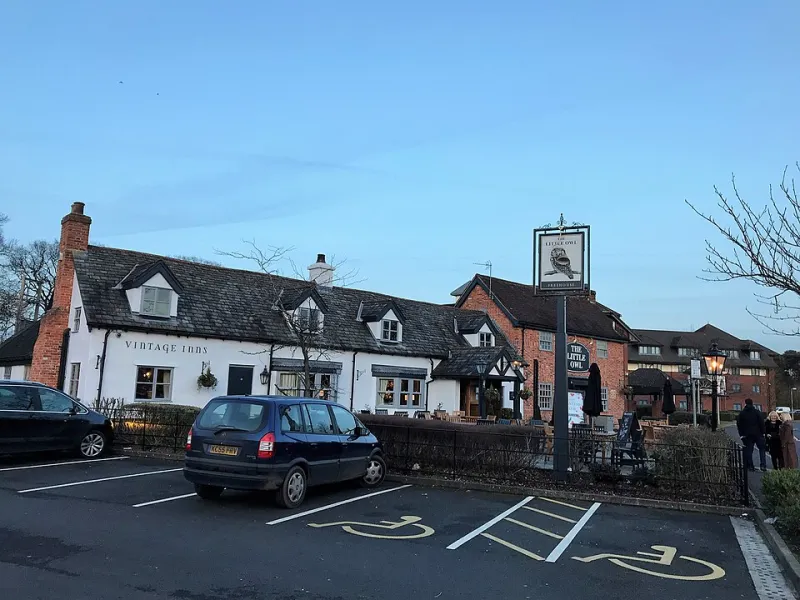
Photo: Richard Humphrey , CC BY-SA 2.0, via Wikimedia Commons
There is a particular kind of silence that settles over a town when its last live music venue closes. It is not the silence of peace, but of absence — the kind that presses against the ears of those who remember what once filled the room. In Bodington, that silence has crept closer with each passing decade, as the stages that once hosted everything from brass bands to post-punk quartets have been converted into flats, shuttered behind planning notices, or simply abandoned to the elements.
Yet the music itself has not entirely disappeared. It lives in the recollections of those who played it, danced to it, and argued passionately about it in the car parks afterwards. To understand Bodington's cultural character is, in no small part, to understand how performance — and specifically music — has functioned here not merely as entertainment, but as a form of civic expression.
The Working-Class Roots of Bodington's Musical Life
For much of the twentieth century, the heartbeat of Bodington's musical culture was found not in purpose-built concert halls but in the function rooms and snugs of its public houses and working-men's clubs. These were democratic spaces in the truest sense: venues where a steelworker or a schoolteacher might share a bench, a pint, and a shared appreciation for a well-executed melody.
Local historian Margaret Calvert, who has spent fifteen years documenting Bodington's social history, describes the clubs of the mid-century as 'the community's living rooms — places where people brought their troubles and left feeling, if not lighter, at least less alone.' The entertainment committees of these establishments were, in their own quiet way, cultural curators, booking local acts and occasionally nurturing talent that would later find broader audiences.
Brass bands, in particular, occupy a significant place in this narrative. Rooted in the nonconformist tradition and the industrial north's civic pride, Bodington's own brass ensembles were once a fixture of public life — performing at fêtes, funerals, and political rallies with equal conviction. Several former members of the now-disbanded Bodington Temperance Band recall practising in a converted warehouse on Millgate Street, a building that has since been demolished. Their accounts speak of an institution that was as much about mutual support as it was about music.
The Venues That Defined a Generation
By the 1970s and 1980s, the musical landscape had shifted considerably. A new generation of performers — shaped by punk, post-punk, and the broader upheavals of Thatcherite Britain — found their footing in a cluster of venues that have since passed into local legend.
The Anchor on Fenwick Lane is perhaps the most frequently cited. Its back room, barely large enough to accommodate a four-piece band and sixty standing audience members, hosted an improbable number of acts who would later achieve wider recognition. 'You couldn't move for guitar leads and ambition,' recalls Derek Mossop, who managed the venue's bookings from 1979 to 1991. 'It was chaotic and brilliant and completely unrepeatable.'
Similarly significant was the Civic Assembly Rooms, a municipal building that, during its heyday, offered a more formal stage for folk evenings, jazz nights, and the occasional classical recital. Its closure in 2003, following years of underfunding, removed one of the few spaces in Bodington where genres could comfortably coexist. The building now stands partially vacant, its ornate interior obscured by boarding and planning notices.
These venues did not merely host music — they hosted arguments, romances, political conversations, and moments of collective grief. When Bodington's steelworks announced redundancies in 1985, it was to a packed and furious benefit concert at the Assembly Rooms that many residents turned. Music, on that occasion, was not escapism but solidarity.
Artists at Risk of Being Forgotten
One of the quieter tragedies of Bodington's musical heritage is how little of it has been formally documented. Unlike the great recording centres of Manchester or Sheffield, Bodington produced artists who largely performed within a regional circuit, leaving behind scant recorded evidence of their work.
Eleanor Briggs, who performed under the stage name 'Nell Bright' throughout the 1980s and 1990s, is a case in point. A singer-songwriter of considerable local reputation, she released two cassette albums through a small independent label that no longer exists, and performed at virtually every significant venue in Bodington over a fifteen-year period. Her recordings are now extraordinarily difficult to locate, and her name appears in almost no formal archive. 'I wasn't trying to be famous,' she explains, when contacted for this article. 'I was trying to be useful. Whether that's been preserved anywhere, I honestly couldn't tell you.'
Her uncertainty is telling. The absence of a systematic effort to collect recordings, setlists, photographs, and oral testimony from Bodington's musical community means that an entire stratum of cultural history is in danger of evaporating within a single generation.
Music as Social Cohesion
Academic research into community music has long suggested that shared musical experience functions as a powerful mechanism for social bonding — reducing isolation, reinforcing collective identity, and providing a shared vocabulary for otherwise inexpressible emotions. In Bodington, this has manifested in ways both grand and intimate.
The town's annual summer festival, which ran for over two decades before funding constraints forced its suspension, drew performers from across the region and provided a rare moment of cross-generational and cross-cultural engagement. Residents of South Asian heritage, whose families had settled in Bodington during the 1960s and 1970s, brought musical traditions that gradually wove themselves into the festival's programming — a quiet, organic process of cultural exchange that received little formal recognition but was noted warmly by those who participated.
Similarly, the gospel choirs associated with Bodington's Black church communities have been a source of musical vitality that mainstream heritage accounts have consistently overlooked. Their influence on the town's broader choral culture has been substantial, yet rarely acknowledged in official histories.
What Preservation Might Look Like
There are encouraging precedents from elsewhere in Britain. Sheffield's musical heritage has been systematically documented through a combination of university partnerships, community archive projects, and dedicated oral history initiatives. Liverpool's cultural infrastructure has long recognised that music is not peripheral to civic identity but central to it.
Bodington need not replicate these models wholesale, but it might draw useful lessons from them. A modest archive — combining digitised recordings, oral testimonies, venue histories, and photographic collections — would represent a meaningful first step. Local schools and libraries could serve as natural partners in such an endeavour, ensuring that the material reaches audiences beyond those who already remember.
For now, the music endures chiefly in memory. In the recollections of ageing bandmates, in the creased programmes tucked into drawers, in the stories that surface at reunions and funerals. These are not negligible repositories — but they are fragile ones. The work of preservation, if it is to happen at all, must begin while the voices that carry these stories remain available to be heard.