Snapshots of the Ordinary: What a Family Photo Collection Tells Us About the Bodington Nobody Recorded
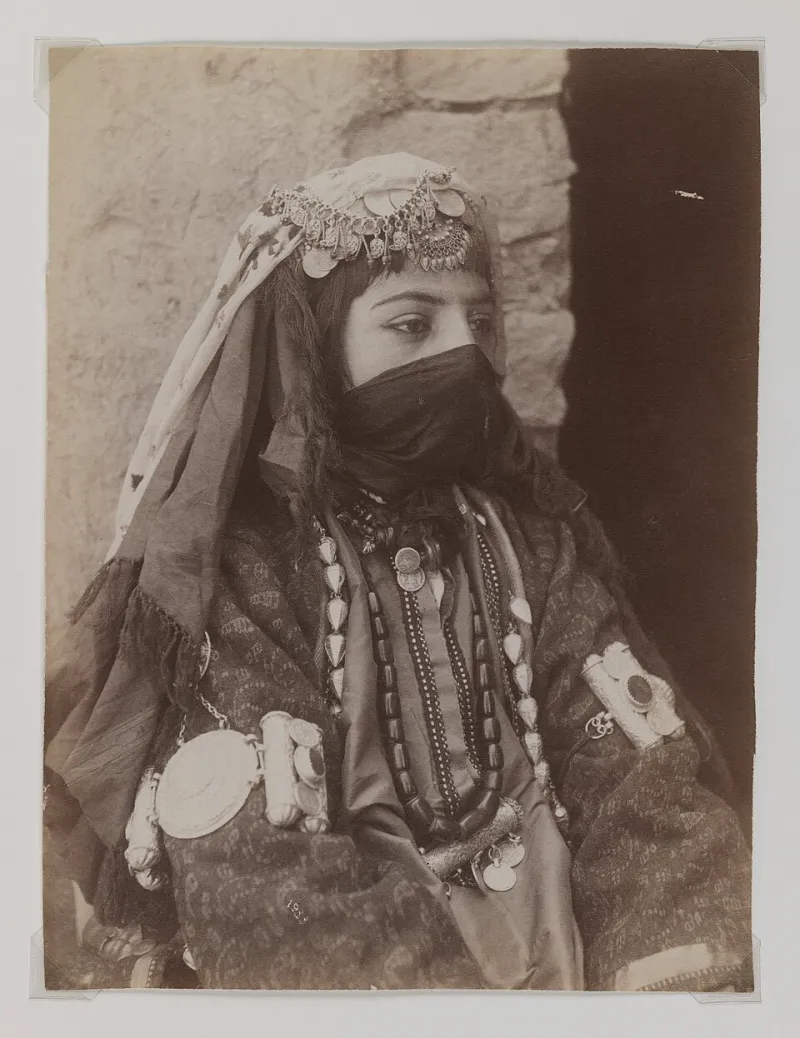
Photo: Late 19th-early 20th century photography from Qajar Dynasty, No restrictions, via Wikimedia Commons
There is a particular quality of light in an old photograph that no archive can manufacture. It falls differently — softer, more tentative — across faces that never expected to be remembered. The woman adjusting her hat brim before a summer fête. The children arranged in reluctant formation on a back doorstep. The men gathered outside a working men's institute, squinting into a Sunday afternoon. These are not the images that end up in official histories. They were never meant to.
And yet when a cardboard box of loose photographs was recently brought to the attention of Bodington Heritage by a local family clearing a relative's estate, it became immediately apparent that what lay inside was something of considerable historical significance. Not because the subjects were prominent. Precisely because they were not.
A Collection That Spans Generations
The collection — provisionally catalogued as the Hargreaves-Mellor Archive, after the two family surnames represented across its contents — comprises approximately three hundred and forty photographs taken between the early 1930s and the late 1990s. The images span at least three generations of two interrelated Bodington households, and together they constitute what one local historian, shown a selection, described as "the most complete domestic record of mid-century Bodington life I have encountered in thirty years of research."
The photographs were taken on a succession of cameras — a Box Brownie visible in several early images, later giving way to a Kodak Instamatic and, by the 1980s, the disposable cameras that became ubiquitous at British celebrations of every kind. None of the photographers appear to have considered themselves anything other than amateurs capturing moments for their own purposes. That informality is precisely what makes the collection so valuable.
Official records — the census, parish registers, council meeting minutes, trade directories — tell us who lived in Bodington, what they were called, and occasionally what they did for a living. They do not tell us what they wore to a wedding in 1954, or how they arranged themselves around a kitchen table at Christmas, or what a street party looked like from the pavement outside number fourteen. The Hargreaves-Mellor photographs do.
Fashion, Furniture, and the Fabric of Daily Life
For social historians, amateur domestic photography offers something that no written source can replicate: visual evidence of material culture at the household level. The clothes visible in the Hargreaves-Mellor collection trace the arc of twentieth-century British fashion with remarkable precision — from the structured formality of pre-war Sunday dress to the synthetic fabrics and wide lapels of the 1970s, and onward to the shell suits and branded sportswear that began appearing in images from the late 1980s.
Equally revealing is the domestic interior. Background details — wallpaper patterns, furniture arrangements, the presence or absence of a television set, the gradual appearance of fitted kitchens — provide a material timeline of changing household circumstances that no survey could have captured with equivalent intimacy. In one image from approximately 1961, a gas fire is visible in a front room that, by a photograph taken perhaps fifteen years later, has been replaced by central heating radiators. The transition from coal to gas to oil-fired heating, which transformed the domestic experience of millions of British households across those decades, is quietly legible in the backgrounds of family portraits.
Recreation, too, is richly documented. Day trips to the coast — Scarborough and Filey appear repeatedly — annual bonfire nights, allotment afternoons, and the particular rituals of local celebrations all feature. Several photographs appear to document a Bodington street party, possibly for the Silver Jubilee of 1977, with trestle tables running the full length of a terraced road and bunting strung between the lamp-posts. No official record of this event has been located in the local archive. Without these photographs, it would have left no trace at all.
What Formal Records Leave Out
The limitations of official documentation are well understood by heritage professionals, but they bear restating in this context. The census, conducted every decade, captures a household at a single moment and records only the most basic facts. Parish registers document the great rites of passage — birth, marriage, burial — but nothing of the life lived between them. Even local newspapers, which provide a richer narrative, tend to report the exceptional rather than the routine.
Amateur photography fills this gap in ways that are only now being fully appreciated. The growth of community archive projects across the United Kingdom — from the Mass Observation Archive at the University of Sussex to countless local digitisation initiatives — reflects a growing scholarly and public recognition that the history of ordinary people is most vividly preserved not in official sources but in the material they generated for themselves.
The Hargreaves-Mellor collection is, in this respect, entirely consistent with a national pattern. What distinguishes it is its depth and coherence. Because the photographs were kept together across generations, they form a continuous visual narrative rather than a series of isolated images. Faces recur. Children grow up. Houses change. The collection has, in other words, the quality of a family memoir — unwritten, unedited, and all the more truthful for it.
The Urgency of Preservation
The condition of the collection when it arrived was, to be candid, mixed. A number of prints had suffered moisture damage. Several had been stored in direct contact with acidic paper, causing fading and discolouration along the edges. A small number were beyond meaningful recovery. The box itself — a supermarket delivery crate pressed into secondary service — had offered only the most rudimentary protection.
This is not unusual. Across the country, and almost certainly across Bodington itself, comparable collections are sitting in attics, under beds, and at the backs of wardrobes in conditions that are slowly destroying them. Photographic prints, particularly those produced before the archival-quality papers of more recent decades, are vulnerable to humidity, temperature fluctuation, light exposure, and physical handling. Without intervention, many will not survive another generation.
Digitisation offers a practical and increasingly accessible solution. Modern flatbed scanners capable of producing high-resolution digital copies from standard photographic prints are available for modest outlay, and a number of local libraries and heritage organisations — including, it is hoped, Bodington Heritage itself in due course — offer assisted digitisation services for community members who lack the equipment or confidence to undertake the process independently.
The digital copy does not replace the original, and the original should always be preserved where possible. But digitisation ensures that the content of a collection survives even if the physical object does not, and it creates the possibility of sharing — of making visible, through community archives and digital exhibitions, the everyday Bodington that formal history has consistently failed to record.
A Call to the Community
The Hargreaves-Mellor Archive has been formally donated to Bodington Heritage and will, subject to ongoing cataloguing work, be made available to researchers and community members in due course. It is a generous and significant gift, and the family's willingness to share something so personal deserves both acknowledgement and gratitude.
But one collection, however rich, cannot represent a community. If the history of ordinary Bodington life is to be preserved with anything approaching completeness, it will require the participation of many households — the retrieval of shoeboxes and albums from storage, the careful examination of what they contain, and the decision to share rather than simply to keep.
Bodington Heritage is inviting residents to come forward with personal and family photograph collections for assessment, digitisation support, and, where families are willing, inclusion in a growing community visual archive. No photograph is too modest. No subject is too ordinary. It is precisely the ordinary that we are trying to save.
The faces in those photographs are waiting to be seen again. The question is whether we will act before the light fades entirely.